
Security Convergence: Bridging the Gap Between Physical and Logical Access
Security Convergence enables organizations to effectively manage both physical and digital security access as the security environment continues to evolve. By integrating physical and logical access management, Security Convergence helps bridge the gap between physical and digital security systems.
When organizations combine Physical and Logical Access Control with Unified Identity & Access Governance, they can strengthen Enterprise Identity Security, minimize risk, and ensure uninterrupted operations.
What is Security Convergence?
Security Convergence is the integration of physical security systems (like badging and facility access) with logical systems (like IT access and identity platforms).
By using this approach, you can enable the integration of physical and logical access through PIAM and IAM integration, allowing for centralized identity data to be managed via Identity Governance and Administration (IGA).
Key Features
Identity & Access Governance Unification - (centralized)
Physical + Logical Access Integration (seamless)
Advanced Identity Governance & Administration (IGA)
Integrate Access Control in Real Time
Life Cycle (onboarding – offboarding) management of identities unified
Integrate PIAM into IAM systems
Real Time Monitoring and Alerts
Automating Compliance and Audit workflows
Provisioning access - based on roles
Enterprise Identity Security enhancement
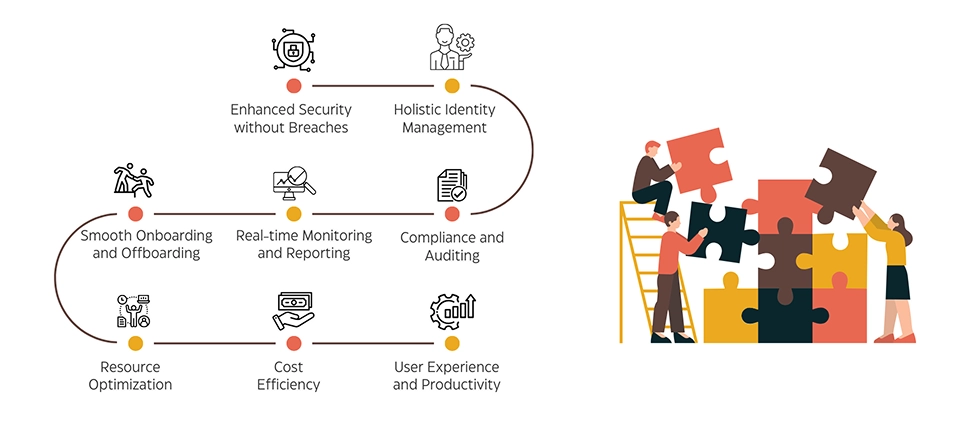
Benefits
1. Improved Security
By integrating physical access and digital access, we can help reduce the potential for compromise.
2. Complete Identity Management
The ability to see identities across many types of environments allows for better control of access rights.
3. Efficient Onboarding and Offboarding
By having access synchronized across multiple systems, there’s less chance for someone to gain unauthorized entry to an organization.
4. Immediate Monitoring
Through having a single dashboard for both physical and digital access, organizations can have real-time tracking capabilities across both realms.
5. Audit/Compliance Assistance
Organizations are able to support audit activity through centralized logging and by having well-defined governance policies.
6. Cost Savings
Organizations can eliminate existing redundant systems and have optimized resources.
7. Enhanced User Experience
Providing users with smooth access to all applications will create a better work environment for employees.
How It Works
1. Identity Creation
The creation of an identity starts with a user being registered through a centralized identity system.
2. Policy Assignment
Identity-based role assignment determines who can access what resources.
3. System Integration
Use of PIAM and IAM integration, associate physical systems with their corresponding IT systems.
4. Access Enforcement
Access to physical and logical resources is granted by using the same physical/technical ID-based access methods.
5. Monitoring & Alerts
Real-time tracking provides comprehensive security visibility.
6. Audit & Compliance Reporting
Enterprise identity security and compliance auditing is completed through data analysis.
Use Cases
1. Large Corporate Structure
Manage access by both employees and visitors within multiple levels of classification-based systems as well as facility access.
2. Data Centre
Ensure the security of company infrastructure, as well as digital assets.
3. Healthcare Systems
Ensure compliance with the Identity Governance Requirements of your organization.
4. Manufacturing Facilities
Manage access of contractors and employees in a timely and efficient manner.
5. Government and Critical Infrastructure
Enable large scale Physical + Logical Access Integration.
FAQs
It refers to the integration of physical security and access systems and digital security and access systems into a single, holistic solution.
Because it closes any existing gaps in your organization’s security and helps strengthen control.
It connect physical identity systems to IT identity platforms.
Identity Governance and Administration (IGA) is a system for managing identities and authorizing access to various resources.
Any organization that manages a combination of both physical and digital environments will benefit from Security Convergence.