
AI in Physical Security: Future of Access Control
The development of intelligent automation is changing the way businesses deal with safety and risk management. AI in Physical Security is the primary driver of this change. AI makes access control systems smarter, faster and more agile.
Historically, security has been primarily dependent on human monitoring of manual, static systems. With the development of Agentic AI and advanced data analytics, businesses can transition to a more proactive and autonomous security environment. These systems are able not only to respond to threats but also to predict and prevent them from occurring.
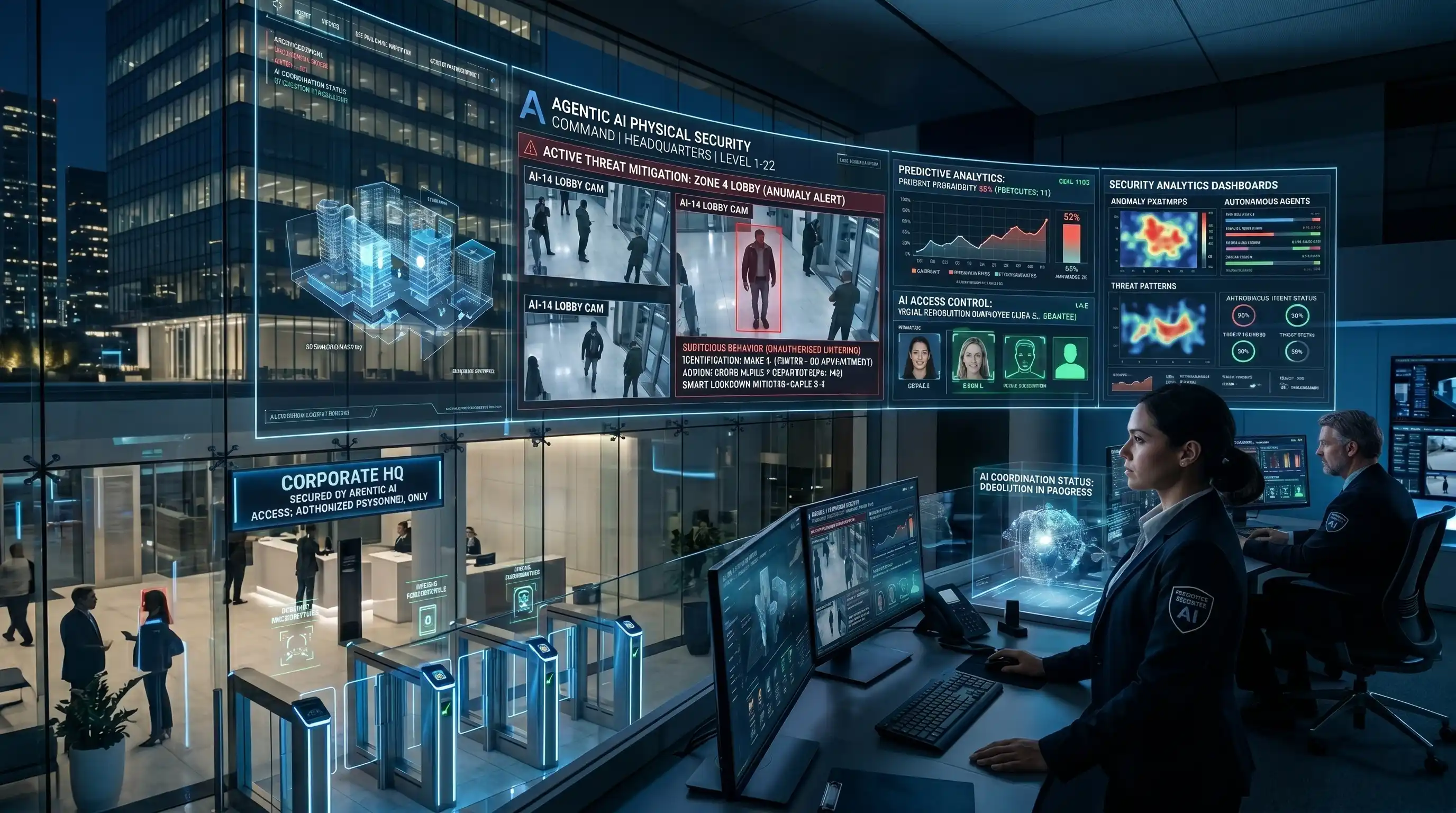
What is Agentic AI in Physical Security?
Agentic AI in physical security refers to the use of intelligent systems capable of making decisions and taking actions without requiring ongoing human involvement.
When combined with AI-Based Access Control, AI Security Analytics, and real-time data processing, these intelligent systems operate as autonomous agents; they continually monitor their environments, identify anomalies or unusual activity, and respond immediately when an identified threat occurs.
The implementation enables the use of Autonomous Security Systems, which extend beyond simple surveillance, to become a source of Predictive Security Intelligence, thereby providing the ability to foresee security risks before they happen.
Key Features
AI Security Analytics: Real-Time Threat Detection
Behavioral Analysis: Detecting Unusual Access Patterns
AI Based Access Control with Dynamic Permissions
Automated Alerts & Responses
Integration with Surveillance Cameras and Internet of Things (IoT)
Continuous Learning through Machine Learning Models
Centralized Dashboard for Monitoring and Control
Context-Aware Access Decisions & Role-Based Access Control
Supports Agentic AI Physical Security Controls
Enterprise Environments Scalable Architecture
Benefits
1. Proactive Threat Prevention
Analyzing Predictive Security Intelligence will allow an entity to identify threats before an incident occurs.
2. Reduced Human Dependency
The use of autonomous security systems reduces reliance on continual manual monitoring.
3. Enhanced Accuracy
Artificial Intelligence, through the analysis of established patterns and context, increases accuracy in making decisions and decreases the number of false alarms.
4. Faster Response Times
Real-time data will allow for immediate response to a security issue.
5. Improved Access Control
The implementation of a dynamic, AI-based Access Control system will allow only those individuals who are authorized to enter a facility based on real-time information.
How It Works
A normal AI in Physical Security Solution works in these steps:
1. Data Collection
Access Control Systems, video cameras, sensors, and Internet of Things (IoT) devices are the primary sources from which the system collects data.
2. AI Processing
Through AI Security Analytics, Artificial Intelligence engines analyze data to identify patterns and detect anomalies.
3. Decision Making
Based on predetermined rules and models derived from the learning process, the system makes autonomous decisions.
4. Action Execution
The system automatically triggers various actions (e.g. Allowing Entry, Denying Entry, Security Alerts, etc.)
5. Continuous Learning
By continually learning new data and experience, the system continues to develop and improve.
Use Cases
1. Corporate Offices
Corporately implemented automated access systems moored to the behavior of users and their associated schedules.
2. Data Centers
Real-time monitoring and predictive threat detection will ensure the highest levels of protection for essential infrastructure.
3. Airports & Transportation
Passengers will be provided with a higher level of security through automated monitoring and detecting unusual activities/deviations.
4. Healthcare Facilities
Vital areas are secured through intelligent access control and advanced monitoring technologies.
5. Smart Buildings
Integrated, fully Autonomous Security Systems available for the newest structures.
FAQs
It is the implementation of AI which will improve access control, surveillance, and identify any threats to physical premises.
It is a dynamic system that analyzes the behavior of the user and the surrounding environment to grant or deny entry access.
It is a system that monitors, evaluates, and responds to a threat without human involvement.
It has proven to be very reliable with adequate implementation, thus increasing accuracy and decreasing the false alarm rate of traditional systems.
Many AI or digital security solutions are designed to operate with all existing physical security infrastructure such as cameras or access control systems.