
AB 2975: What Hospitals Need to Know About Weapons Screening and Security Compliance
Preparing California hospitals for AB 2975 with integrated weapons detection, visitor management, and access control
- What Is AB 2975?
- AB 2975 Compliance Deadline (2027)
- Entrances That Require Weapons Detection
- Why Weapons Detection Alone Is Not Enough
- How Splan Supports AB 2975 Readiness
- Integrated Hospital Entry Security Workflow
- Key Benefits of Integrated Security
- AB 2975 Compliance Checklist
- Why Choose Splan
- Prepare Your Hospital for AB 2975
- FAQs
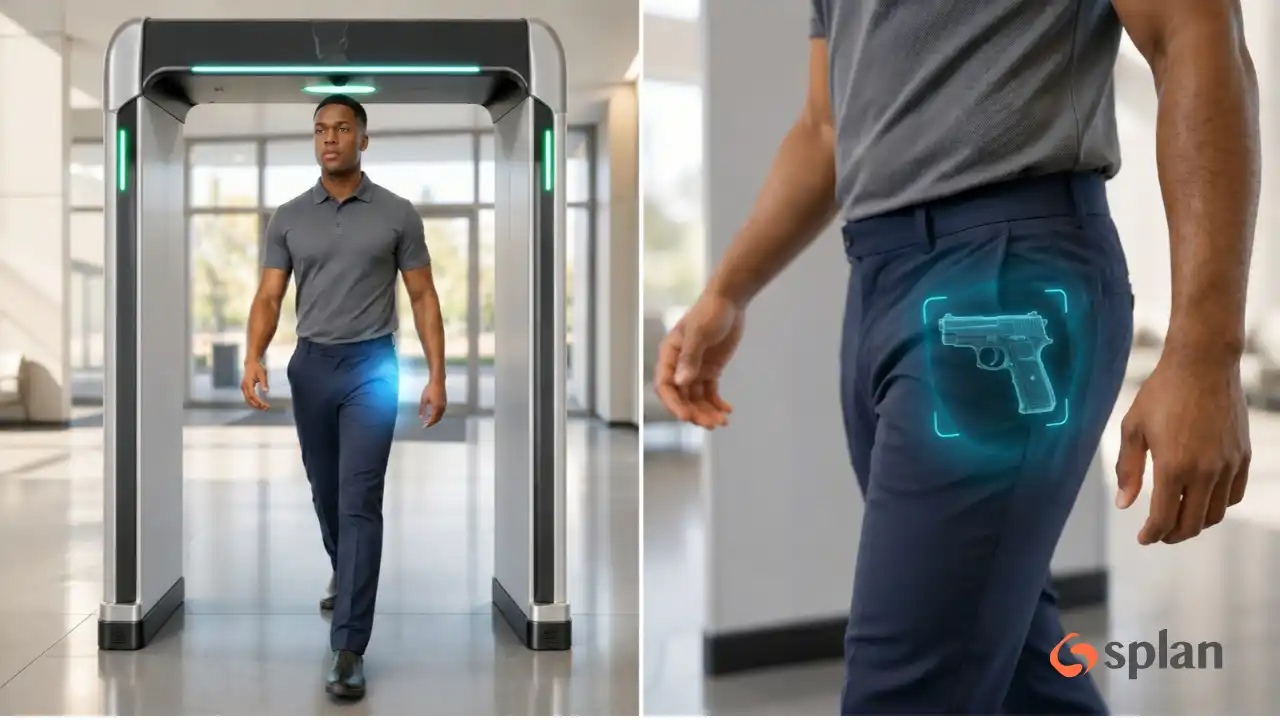
Hospital security is evolving, and California's Assembly Bill 2975 (AB 2975) is bringing new attention to weapons screening, workplace violence prevention, and hospital entrance security.
For California healthcare organizations, preparing for AB 2975 compliance involves more than selecting a weapons detection system. Hospitals must also evaluate how visitors are identified, how access is managed, how security incidents are handled, and how screening procedures fit into everyday hospital operations.
With California's regulatory deadline approaching in 2027, hospital administrators and security leaders need a coordinated strategy that balances security, patient safety, and operational efficiency.
Splan Healthcare Visitor Management helps hospitals strengthen their entrance security operations through digital visitor registration, identity verification, access control integration, real-time notifications, and healthcare-specific workflows.
When used alongside compatible weapons detection technology, Splan can support a more connected approach to hospital security and AB 2975 readiness.
What Is AB 2975? Understanding California's Hospital Weapons Screening Law
AB 2975 is a California law that directs state regulators to establish weapons detection screening requirements for specified hospitals as part of healthcare workplace violence prevention standards.
Signed into law in September 2024, AB 2975 amends California Labor Code Section 6401.8 and directs the Occupational Safety and Health Standards Board to update the state's workplace violence prevention requirements.
The legislation focuses on improving hospital safety by establishing weapons screening policies at designated entrances and requiring appropriately trained personnel to implement those policies.
The requirements generally apply to covered general acute care hospitals, acute psychiatric hospitals, and specialty hospitals licensed under California Health and Safety Code Section 1250, subject to specific statutory exclusions.
Key AB 2975 Requirements for California Hospitals
Under AB 2975, the amended standards must address:
Automated weapons detection: Screening equipment that automatically examines a person's body at designated hospital entrances.
Entrance screening: Weapons detection at the main public entrance, emergency department entrance, and separately accessible labor and delivery entrance.
Security personnel: Appropriate trained personnel, other than healthcare providers, to operate and monitor screening equipment whenever the specified entrances are open to the public.
Mandatory training: At least eight hours of training covering equipment operation, weapon detection response, de-escalation, and implicit bias.
Alternative screening: Reasonable procedures for patients, visitors, and family members who decline automated screening.
Security response procedures: Defined protocols when a dangerous weapon is detected.
Public signage: Notices explaining weapons screening requirements while protecting access to emergency medical care.
These requirements highlight the growing importance of connecting physical security technology with effective hospital entrance operations.
AB 2975 Compliance Deadline: What Hospitals Need to Know for 2027
March 1, 2027, is the statutory deadline for California's Occupational Safety and Health Standards Board to adopt the amended hospital weapons screening standards.
The law requires hospitals to comply by an effective date established by Cal/OSHA that is no later than 90 days after the standards are adopted.
As of November 2026, Cal/OSHA has issued discussion-draft regulations, but hospitals should continue monitoring the rulemaking process for the final requirements and confirmed effective date.
Preparing for the legislation may require hospitals to:
Evaluate weapons detection technologies.
Review security staffing and training.
Assess current entrance screening procedures.
Update visitor management policies.
Integrate security technology with hospital operations.
Establish reporting and response workflows.
Early planning can help hospitals address deployment challenges before the applicable compliance deadline.
Which Hospital Entrances Require Weapons Detection Under AB 2975?
AB 2975 identifies three primary categories of hospital entrances for weapons detection screening.
Main Public Entrance
The primary entrance used by patients, visitors, and other members of the public must be addressed in the hospital's screening policy.
Hospitals should consider how weapons detection equipment will operate alongside reception desks, visitor registration systems, and access authorization procedures.
Emergency Department Entrance
Emergency departments require particular attention because screening processes must coexist with urgent medical care.
Hospitals must ensure their security procedures do not interfere with their obligations under the Emergency Medical Treatment and Labor Act (EMTALA).
Labor and Delivery Entrance
A separately accessible public entrance to a hospital's labor and delivery department must also be included in the screening policy.
Hospitals should design these workflows with patient safety, accessibility, and the needs of patients and families in mind.
AB 2975 provides exceptions for certain facilities and screening methods. For example, handheld metal detector wands generally cannot serve as the sole screening equipment, although exceptions apply to specified hospitals and entrances. Hospitals should review the final standards when determining their applicable obligations.
Why Weapons Detection Alone Is Not Enough for Hospital Security
Weapons detection technology serves a specific function: screening individuals for objects that may pose a security risk.
However, hospital entrance security also involves visitor authorization, patient privacy, access restrictions, and communication between hospital teams.
Consider a common scenario.
A visitor arrives at the main hospital entrance. A weapons detection system screens the individual, while the hospital's visitor management process verifies the visit and determines the appropriate access permissions.
If the screening equipment identifies an object requiring further inspection, trained security personnel follow the hospital's established response procedures.
After the appropriate screening and access authorization steps, the visitor may proceed according to hospital policy.
Without coordinated systems, hospitals may depend on separate paper logs, manual verification, and disconnected security processes.
Integrating weapons detection with hospital visitor management can help create a more organized and accountable entrance-security workflow.
This is where Splan adds value.
How Splan Supports AB 2975 Readiness and Hospital Visitor Security
Splan provides a healthcare-focused visitor management platform that helps hospitals manage visitor identities, access permissions, security notifications, and visitor-related records.
Splan does not replace the automated weapons detection equipment required under AB 2975. Instead, it supports the surrounding security and visitor-management processes.
1. Weapons Detection System Integration
Splan describes support for integrating weapons detection into healthcare visitor entry workflows.
With compatible third-party technology and appropriate configuration, hospitals can evaluate how weapons screening events, visitor registration, and access authorization processes work together.
Potential integrated workflows include coordinating entrance operations, communicating relevant security events, and supporting authorized visitor processing.
Actual integration capabilities depend on the selected weapons detection system, available interfaces, and deployment configuration.
2. Digital Visitor Check-In and Identity Verification
Traditional sign-in sheets can make it difficult for hospital personnel to maintain consistent visitor records.
Splan provides digital check-in and check-out processes that help hospitals manage visitor registration and identity verification.
Hospitals can use Splan to support visitor identification, maintain visit-related records, and manage entry authorization.
This creates greater visibility into registered visitors while reducing manual administrative work.
3. Visitor Watchlists and Security Screening
Hospital security teams need to identify visitors who may require additional authorization or review.
Splan supports visitor watchlist and background-check workflows to help organizations evaluate visitor access based on their security policies.
These capabilities are distinct from physical weapons screening but provide an additional layer of visitor risk management.
Hospitals must configure such checks in accordance with applicable laws, privacy requirements, and internal policies.
4. Epic, Cerner, and HL7 Healthcare Integration
Visitor management in hospitals differs from conventional office environments because access decisions may depend on patient-related information.
Splan supports integration with healthcare systems, including Epic, Cerner, and HL7-based interfaces.
This enables hospitals to build workflows for patient lookup, visit validation, and visitor authorization while applying appropriate confidentiality controls.
Healthcare integration helps connect visitor management with existing hospital processes rather than requiring security personnel to rely entirely on separate manual systems.
5. Physical Access Control and Visitor Badges
Weapons screening at a hospital entrance does not automatically authorize access to every department.
Splan supports integration with physical access control systems, helping hospitals manage visitor credentials and department-specific permissions.
Hospitals can establish policies for access to patient care units, restricted areas, and other sensitive locations.
Visitor badges and authorization workflows can help security and hospital staff distinguish approved visitors from individuals requiring additional verification.
6. Security Alerts and Emergency Notifications
Communication is essential during security incidents.
Splan offers notification capabilities that can help hospital personnel communicate visitor-related and security events.
When a supported integration is available, hospitals can assess opportunities to connect weapons detection events with their wider security response workflows.
Physical searches, weapons confiscation, and security intervention must remain under the control of appropriately trained personnel and established hospital procedures.
7. Visitor Records and Security Reporting
Documentation helps hospital administrators understand entrance activity and review operational practices.
Splan maintains visitor management records and supports reporting for relevant visitor and access events.
These capabilities can contribute to broader security oversight and operational accountability.
However, hospitals must separately ensure that any records required under California's workplace violence prevention regulations, including incident reporting and retention requirements, are properly maintained.
AB 2975 and Splan: Building an Integrated Hospital Entry Security Workflow
A connected hospital security approach can bring together multiple technologies.
Step 1: Weapons Detection Screening
Individuals entering designated hospital entrances are screened using appropriate weapons detection equipment, subject to applicable exceptions and alternative screening policies.
Step 2: Visitor Registration
Splan manages visitor check-in, registration, and identity verification where appropriate.
Step 3: Visitor Authorization
Splan can support patient-visit validation, visitor policies, and authorized access permissions using available healthcare integrations.
Step 4: Security Response
Trained security personnel address detection alarms and other security concerns according to established hospital policies.
Step 5: Access Management and Reporting
Authorized visitors receive appropriate access permissions, while relevant visitor activity records support hospital oversight.
These operations may occur in different sequences or in parallel depending on the hospital entrance, patient needs, and emergency care requirements.
The goal is to create an integrated experience without treating visitor registration as a substitute for physical weapons screening.
Key Benefits of Integrated Hospital Security with Splan
Enhanced Hospital Security
Combining weapons detection with identity verification and access control can help hospitals strengthen multiple layers of their security infrastructure.
Improved Visitor Experience
Digital registration, automated attendants, and self-service kiosks can help streamline visitor interactions and reduce unnecessary administrative delays.
Better Operational Visibility
Centralized visitor records can give authorized hospital personnel better insight into visitor activity and access management.
Support for Regulatory Readiness
Configurable workflows, access policies, and audit records can support the hospital's broader security management and documentation efforts.
Integration with Existing Hospital Infrastructure
Splan's healthcare system integrations and physical access control capabilities help hospitals incorporate visitor management into existing clinical and security environments.
AB 2975 Hospital Compliance Checklist
As California hospitals prepare for the amended standards, security and compliance teams should evaluate the following areas:
Identify hospital entrances covered by AB 2975.
Review the latest Cal/OSHA regulatory requirements.
Evaluate eligible automated weapons detection equipment.
Assess security staffing and mandatory training.
Develop policies for detected weapons and alternative screening.
Protect emergency medical treatment access.
Review visitor registration and identity verification processes.
Evaluate integration with visitor management and access control systems.
Establish signage, documentation, and incident response procedures.
Test operational workflows before full deployment.
Completing these steps can help hospitals build a structured approach to security readiness while preserving clinical and visitor operations.
Why Choose Splan for Hospital Visitor Management and Security?
As hospital security requirements evolve, healthcare organizations need solutions that connect visitor operations, identity management, and physical access control.
Splan offers a configurable visitor management platform designed for healthcare facilities, supporting digital visitor registration, hospital EHR integration, departmental access policies, visitor communication, and reporting.
By combining Splan's capabilities with an appropriate weapons detection solution, hospitals can work toward a more coordinated approach to entrance security.
Prepare Your Hospital for AB 2975 with Splan
California AB 2975 is reshaping how covered hospitals must approach weapons screening and entrance security.
Preparing for the law requires more than technology procurement. Hospitals need coordinated screening policies, trained personnel, effective visitor access management, and operational procedures that preserve patient care.
Splan helps hospitals connect visitor identity, registration, access control, and security workflows—supporting a layered approach to AB 2975 readiness.
Explore how Splan can help strengthen hospital visitor management and support your broader security modernization strategy. To learn more, read our healthcare visitor management guide or request a demo with the Splan team.
Frequently Asked Questions About AB 2975
AB 2975 is a California law requiring regulators to update hospital workplace violence prevention standards to include weapons detection screening policies at specified hospital entrances.
The law requires amended standards to be adopted by March 1, 2027. Hospitals must comply by the effective date established by Cal/OSHA, which must be no later than 90 days after adoption.
Yes. AB 2975 requires the amended standards to include automated body-screening weapons detection devices at designated hospital entrances, subject to applicable statutory exceptions.
No. AB 2975 does not specifically require hospitals to purchase visitor management software. However, such software can complement weapons detection by supporting identity verification, visitor authorization, access control, and operational records.
Splan supports hospital visitor check-in, identity verification, visitor watchlists, access control integration, notifications, healthcare system integration, and visitor activity reporting. When deployed with compatible external screening technology, these capabilities can support an integrated hospital security strategy.
No. Splan is a visitor management and access workflow platform. Physical weapons detection requires separate equipment that meets the applicable regulatory standards.